





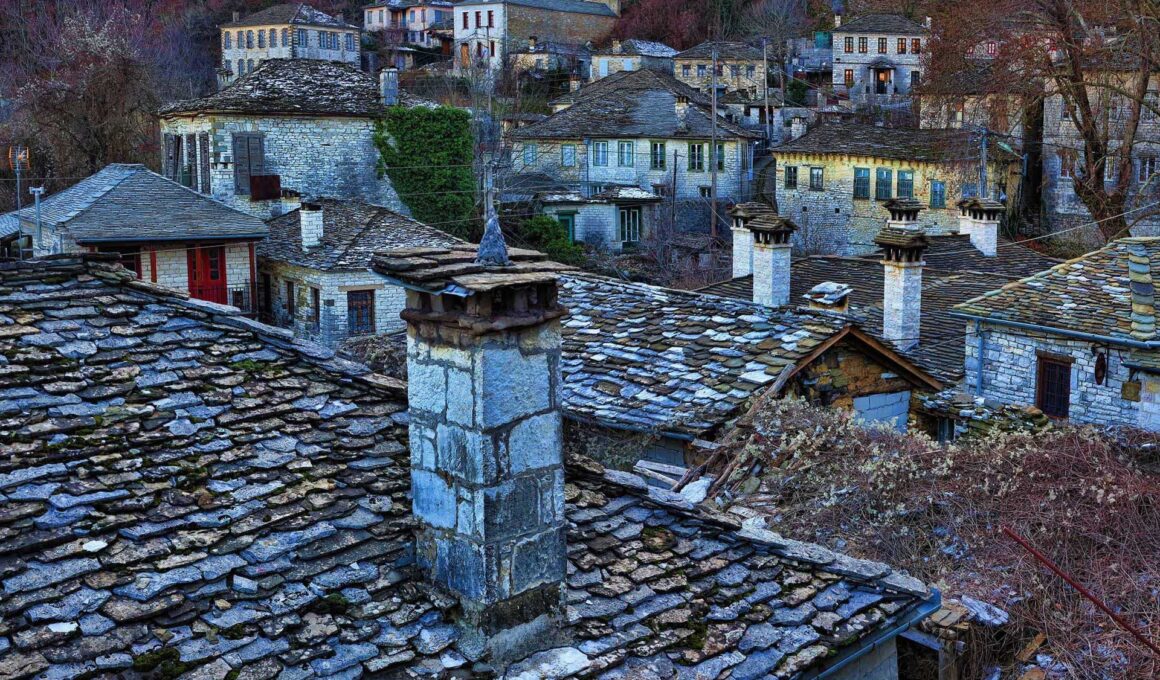
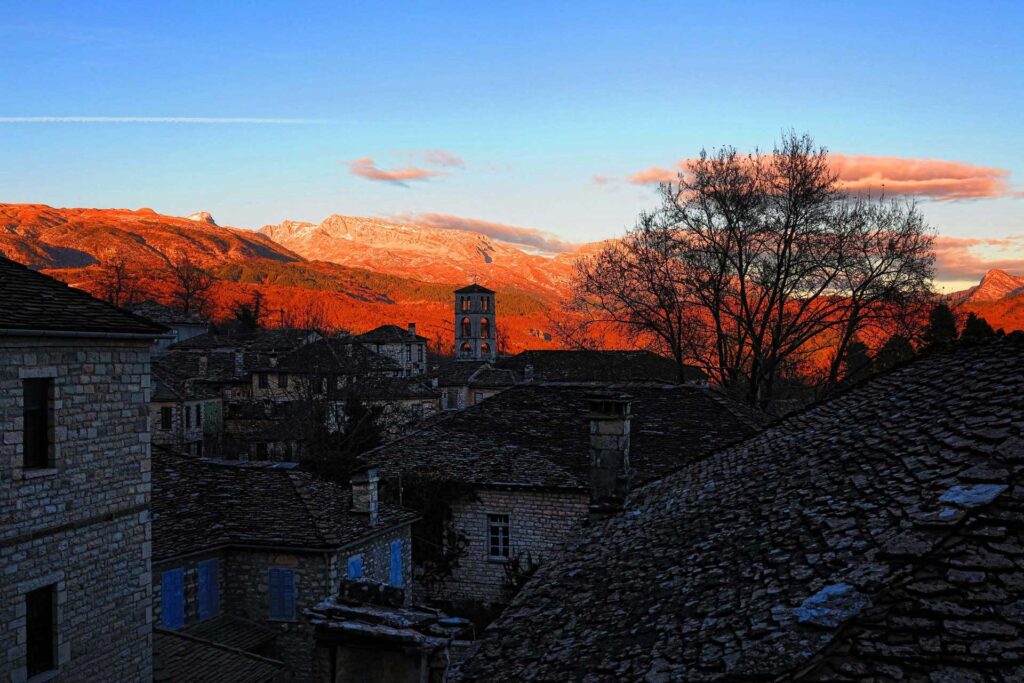
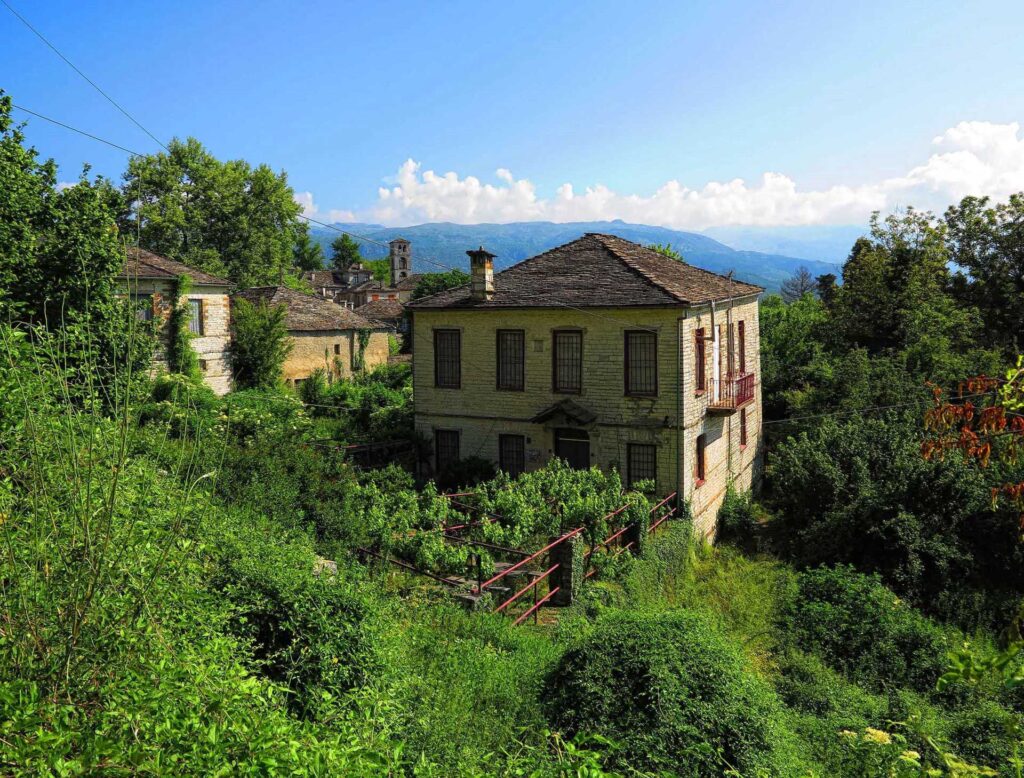
Dilofo is built amphitheatrically in a clearing between two hills. Even though it is small it is one of the most beautiful villages of Zagorohoria. It is located among oaks, running waters, fir trees and fruit trees (apple trees, walnuts, cherry trees, grapes, etc.).
It is one of the best preserved Zagorohoria with its authentic architecture.
This is mainly due to its characterization as a preservable settlement, which means that only restorations and reconstructions of old buildings are allowed. However, like all the mountain villages, it is slowly being deserted while the few inhabitants are engaged in livestock and tourism.
About the village
Its old name was Sopotseli, which means a place with plenty of water because the village had many wells with clean water.
According to Lampridis, after the conquest of Ioannina by the Turks in 1430, Sopotseli and many other villages signed the treaty of subjugation (or the Treaty of Vinikos), which granted them privileges (autonomy, self-government, partial tax exemption, etc.). However things were still difficult, Turkish taxes were heavy, there were many raids and robberies taking place, resulting in many men moving to foreign lands to improve their own lives, their families and their place. With their money they built better houses and helped the village do great.
Its progress was so big that until the end of the 19th century there was a Greek school, female and male schools, as well as scientists practicing the profession of doctor. In 1895, the figures mentioned in the then Ottoman Statistics (Salname) show that the population had reached 439 inhabitants.
In 1927 Sopotseli took the name Ambelies and in 1928 it changed with the present Dilofon, from its position between two hills.
World War II found the village still with several inhabitants (about 140), but the hardships, the later Civil War, and the immigration of young people into the big cities brought desolation. However, Dilofo managed to keep its traditional architecture intact and for this reason, in 1969, it was declared a historic listed monument with a special natural beauty that resulted in the restoration and reconstruction of the old buildings.
Unfortunately, today these beautiful buildings are almost all empty, since the permanent residents are very few.


What to see in Dilofo
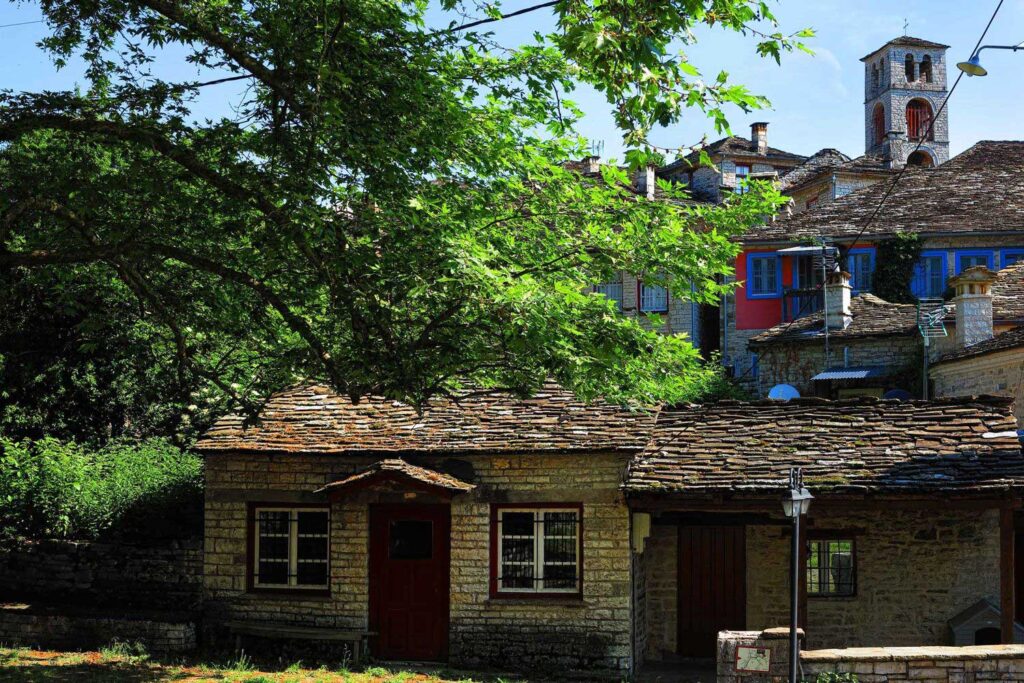
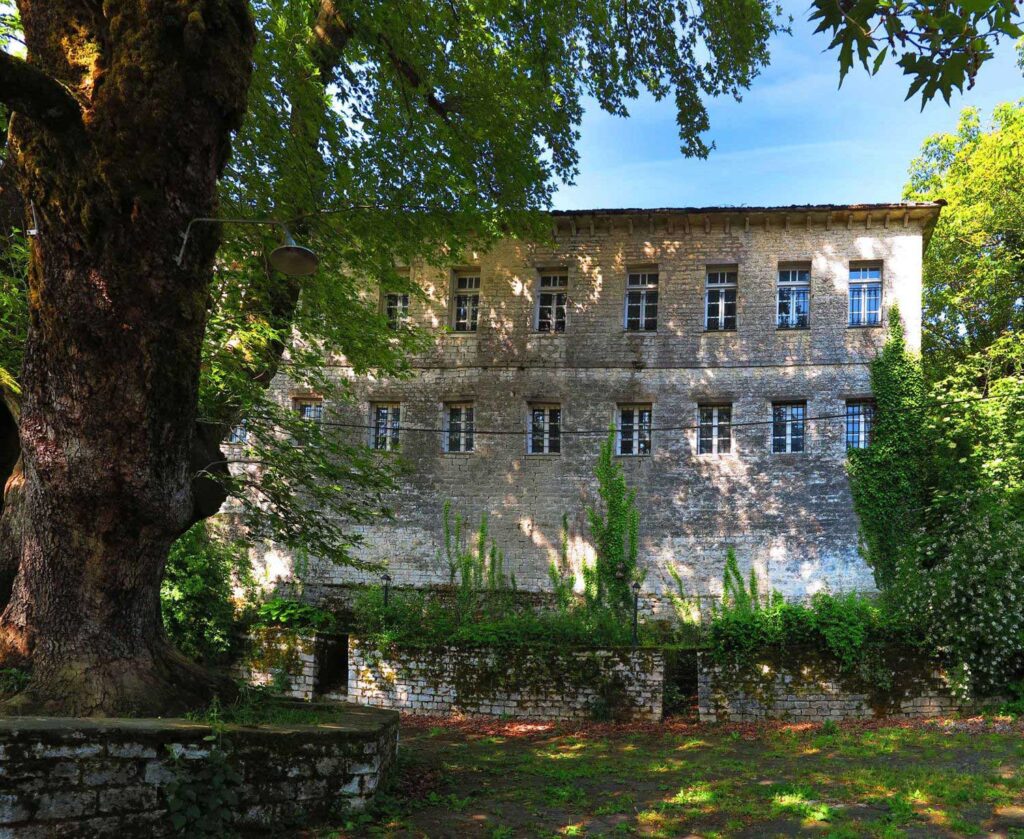
The most beautiful part is the central square in the middle of the village, which leads to a very nice wide central cobbled road. It is a small beautiful square with a huge plane tree, which is said to number 4 centuries of life and is considered to be a natural monument.
The three main paved cobbled streets leading to the three counties, Pano, Kato and Pera Mahala begin their route from this plane tree. They are quite wide and on the side there are huge walls that hide the courtyards of the houses from the eyes of the passers-by.
As a preservable settlement there are several traditional buildings, arround 70. Some of them are dilapidated, some renovated, others in moderate or good condition, while 10 are inhabited.
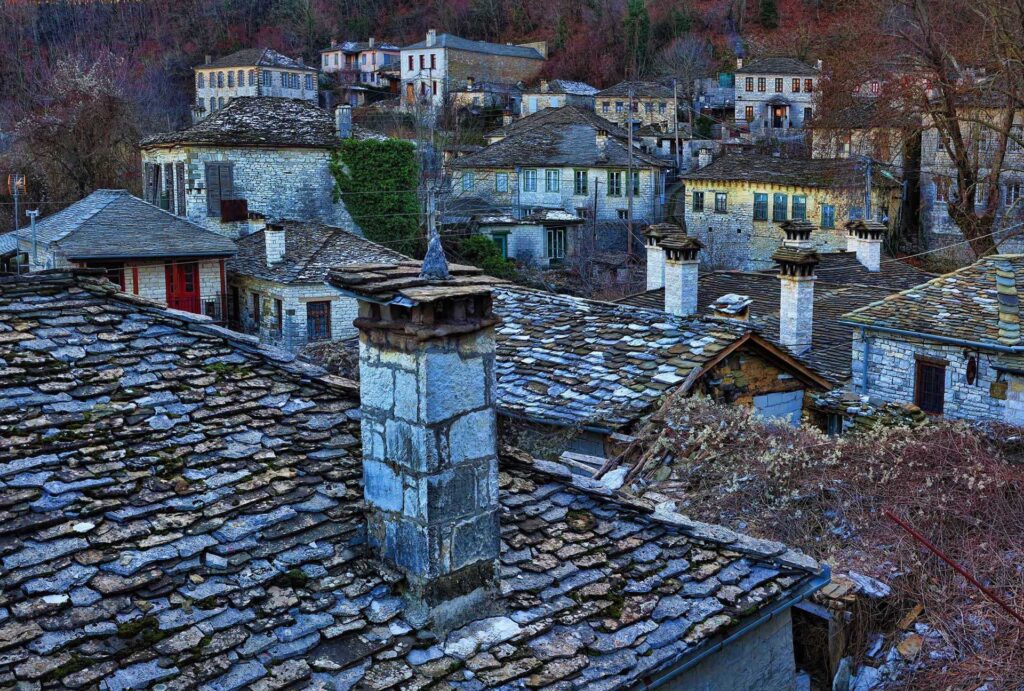
From the mansions the ones that stand out are:
- The mansion of Kleo Milkotti built in 1880 which is preserved in a very good condition thanks to the care of the owner
- The mansion of George Vakolas, just above the square
- The one of Palaios built in the 19th century
- and the house of Makropoulos or else House of Loumidis.
The last one is at the entrance of the village and is the tallest in Zagori. The first floor has a height of 13.5m. It is built of chipped stone and it has nice views of the surrounding villages and mountains, especially towards Koukouli. Not without reason.
Tradition says that once a woman from Koukouli married a rich man from Dilofo and came to live here, but she felt intense nostalgia for her village. Therefore, her husband built the house so high that she could see her village from her windows and not dwindle. The house was built in the middle of the 19th century by G. Makropoulos, who was a merchant in Asia Minor, but later on the property was passed on to the well-known Loumidis family.

Near the village there are also two stone bridges:
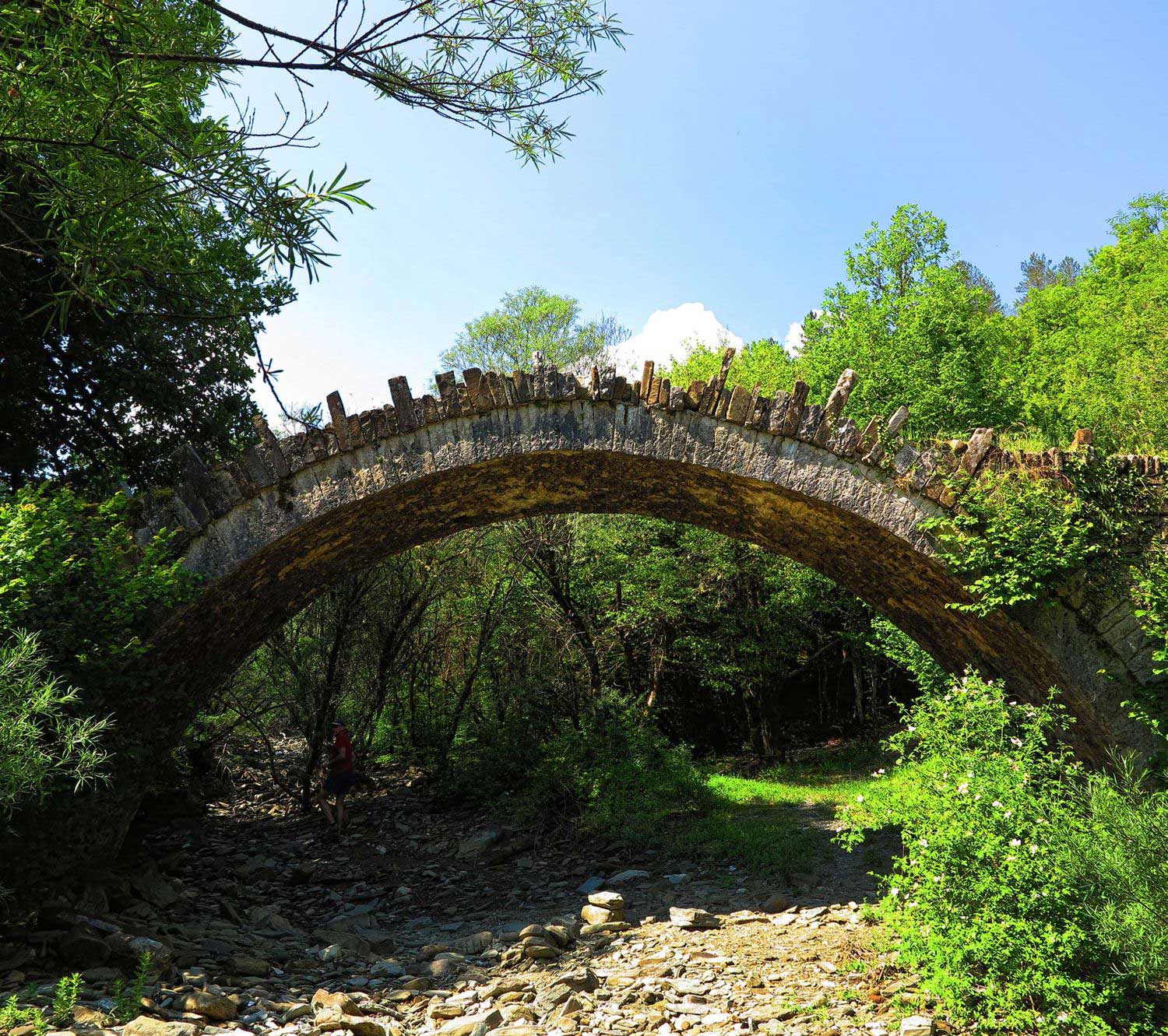
The Bridge of St. Minas: a small one-arched bridge under Dilofo, built next to the homonym small church. It bridges Xeropotamos and it is unknown when and from whom it was built.

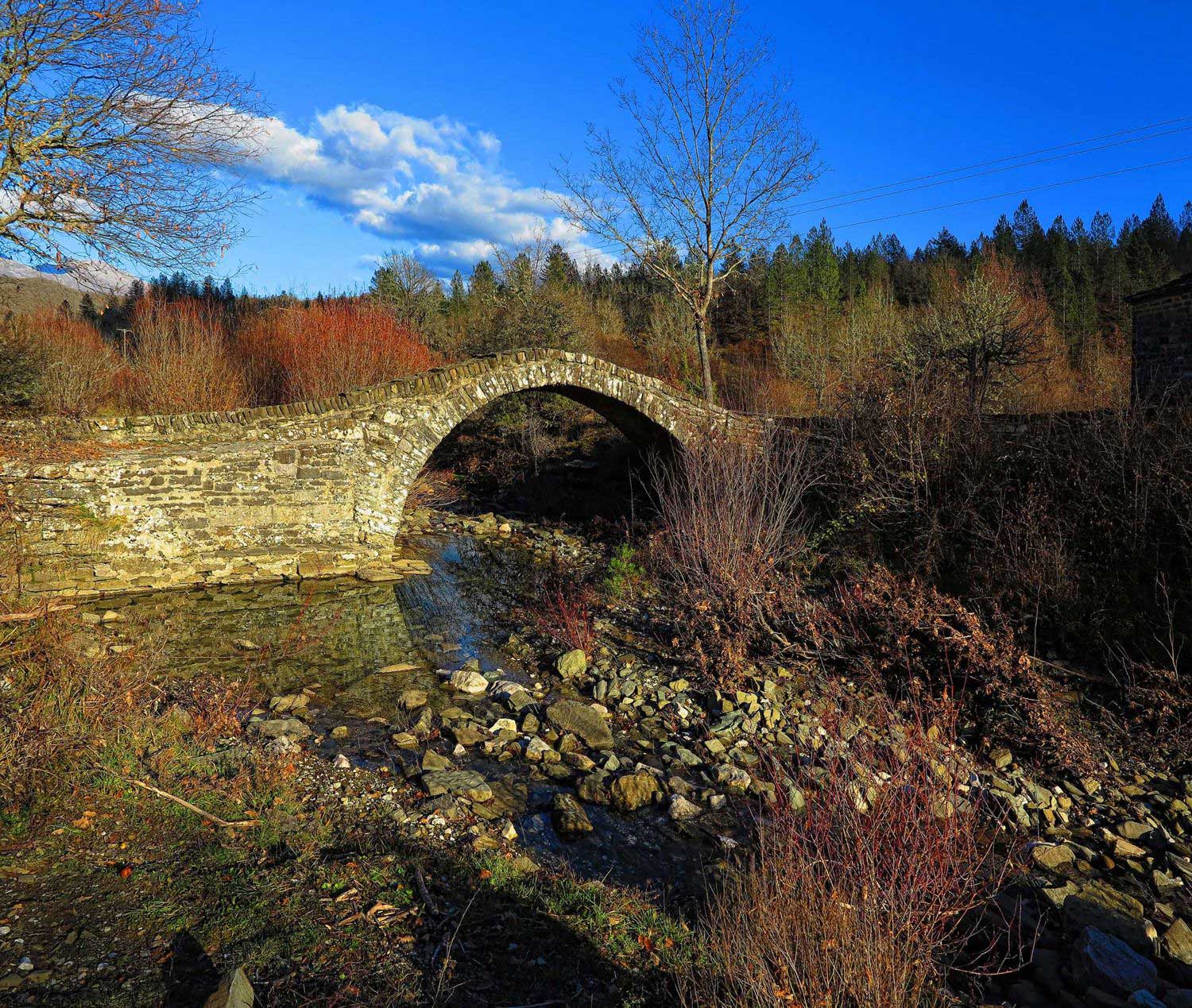
Captain Arkoudas’ Bridge: On the way from Ioannina to Kipi and before the bridge of Kokoros we meet it on our left hand. It was built in 1806 with the support of Jewish Solomon Matsili. Its original names were “the bridge of the Jew” or “the bridge of Xeropotamos”. But when it was destroyed and rebuilt with money offered by Xanthis Lavdas it became known as the “bridge of Lavdas”.
On August 6, 1906, the Ottoman authorities assassinated at that point the Samarinian chieftain Giorgos Alibidatos, known as Captain Arkoudas. Since then in honor of the heroic Captain, his name was given to the bridge, a name that has prevailed since the beginning of the 20th century.

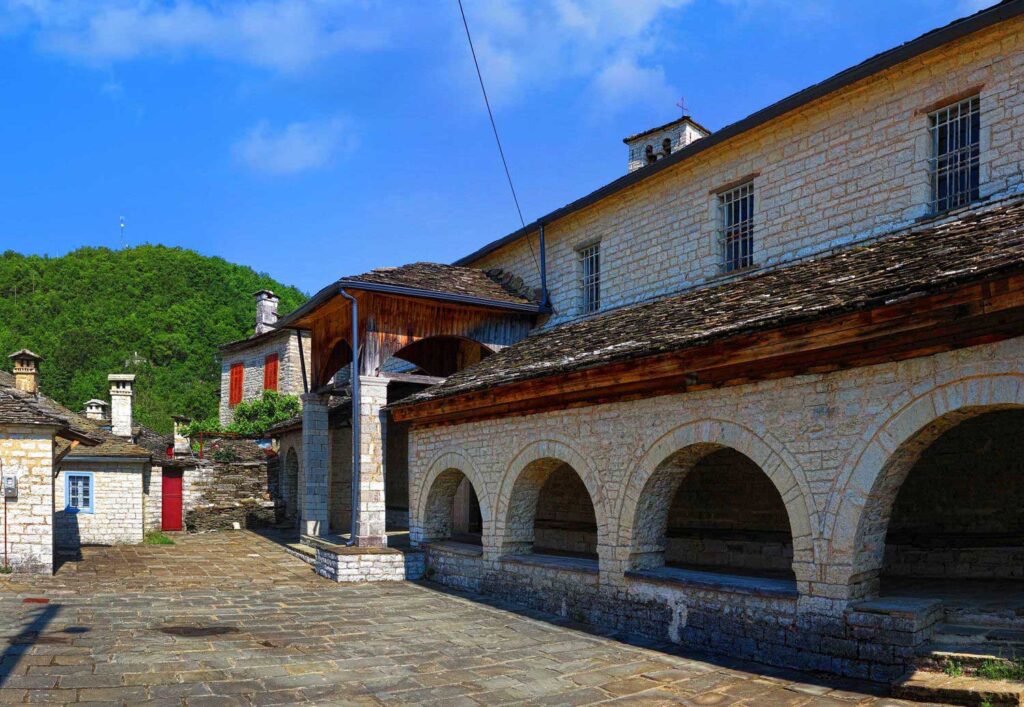
You can also visit the church of the Assumption of the Virgin Mary, a great impressive stone church near the square built in 1850 and renovated in 1897 after a fire that destroyed it completely.
Finally, Anagnostopouleios School in the Central Square behind the plane tree are among the attractions that impress.
The activities vary, since Dilofo is located in the main zone of the North Pindos National Park. Tours and trips to nearby villages, visiting bridges and ravines are unique experiences.